
Vanishing Point
Vanishing Point is an arts/science collaboration to raise awareness about the issues surrounding plastics pollution in the oceans and it’s ecological, biological and social impact. Initially the brainchild of wildlife artist Katherine Cooper, she was joined by myself and three other artists (Sophie Carnell, Toby Muir-Wilson and Ron Moss) and three scientists from the Institute for Marine and Antarctic Studies (IMAS, in Hobart, Tasmania) researching impacts of ocean plastics (Heidi Auman, Patti Virtue and Frederique Olivier). The goal of the project is to raise awareness in the community about the impact of our daily use of plastics through art and science communication in a complimentary and engaging manner.


Marine debris poses a vast and growing threat to the marine and coastal environment. Around 8 million items of litter enter the marine environment every day ultimately representing seven billion tonnes of plastic littering the ocean every year. It is estimated three times as much rubbish is dumped into the world’s oceans annually as the weight of fish caught.
Available information indicates at least 77 species of marine wildlife found in Australian waters and at least 267 marine species worldwide are affected by entanglement in or ingestion of marine debris, including 86% of all sea turtles species, 44% of all seabird species and 43% of all marine mammal species.Other threats to wildlife and ecosystems include destruction or smothering of the sea bed, accumulation of toxic substances and the transportation of invasive species.
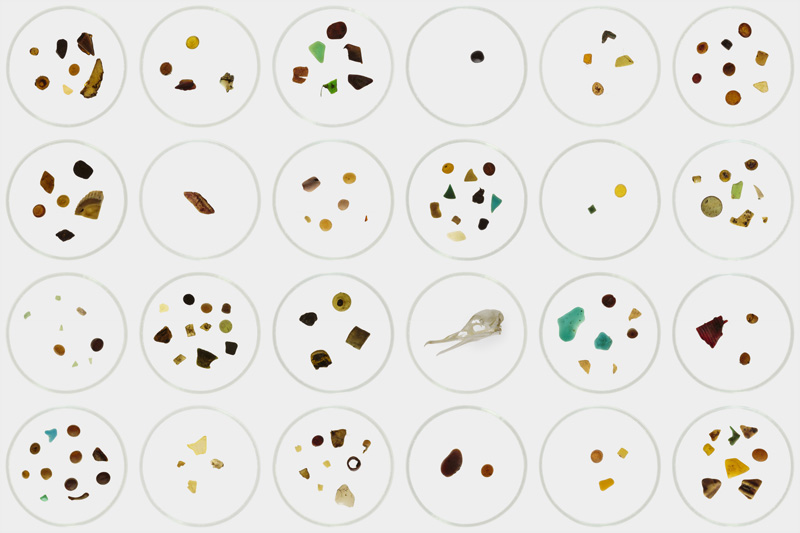
‘Food for Thought‘ is a piece derived from a study by IMAS scientists. Small pieces of colourful plastic were taken from the stomachs of fledgling short-tailed shearwater chicks (confiscated from poachers at Clifton Beach near Hobart). Of the 171 chicks sampled, 96% had plastic in their stomachs. Each circle in the artwork is a petri dish containing the plastic taken from a single chick. The extent of the problem is obvious, what we understand less is the impact it has on these birds. Of the 23 birds represented, is it reasonable to assume at least one might die from plastics ingestion? Will the rate of mortality be higher? Are we willing to accept this loss of life in return for the convenience of plastic products? Food for Thought.